
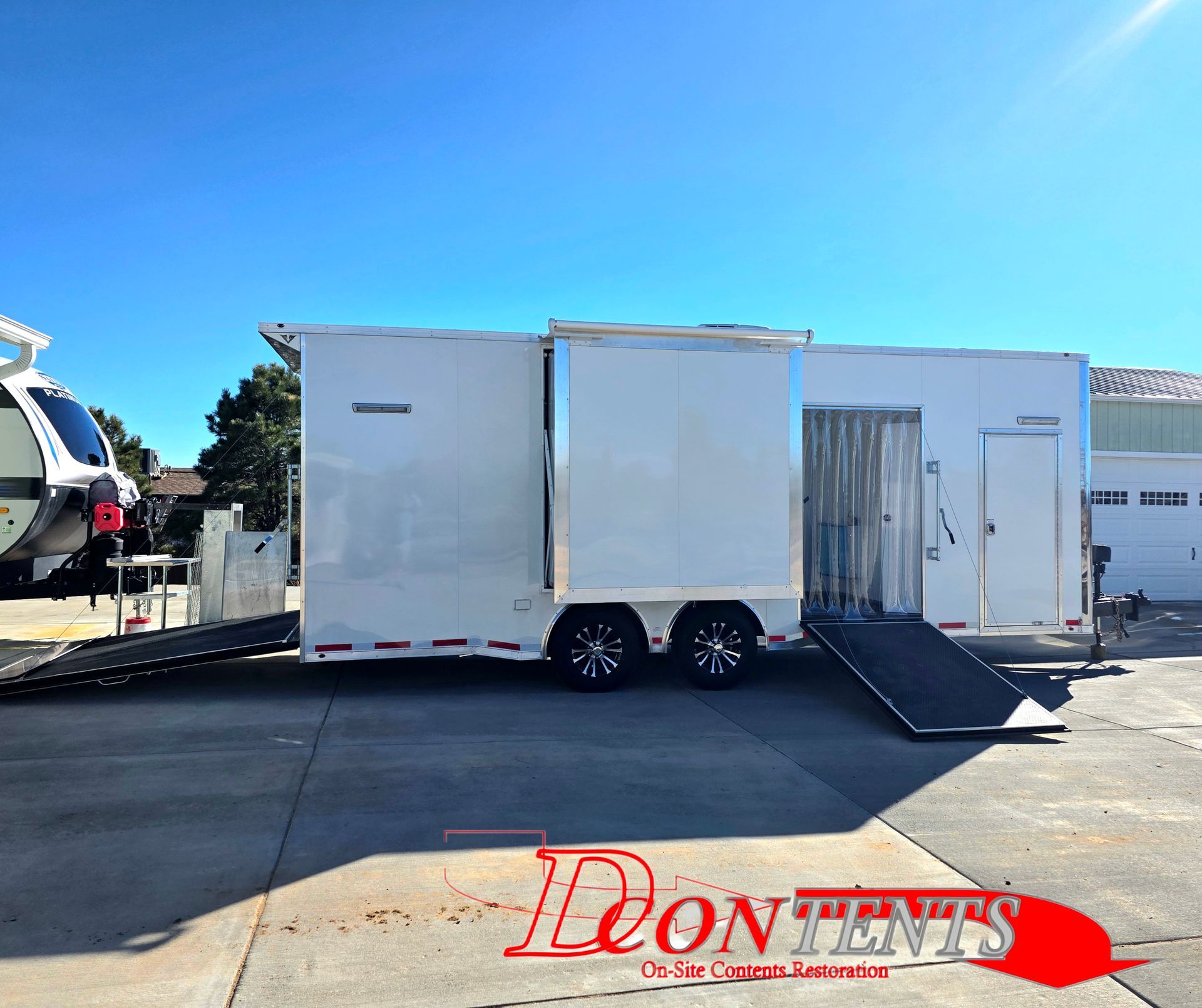
Mobile Decontamination Trailer System
Operations Procedure Manual
Introduction
The DContents Mobile Decontamination Trailer System is designed to provide efficient on-site contents restoration and decontamination services following natural disasters and environmental contamination events. The trailer system is mobilized directly to the disaster location and configured according to the specific type of loss, including flood damage, fire and smoke damage, mold contamination, airborne contaminants, and water-related losses.
The system is engineered to provide a controlled decontamination environment that improves production efficiency, enhances salvageability, and protects both contents and personnel throughout the restoration process.

1. Trailer System Air Pressure Control
The trailer system operates under constant positive air pressure controlled by Air Filtration Devices (AFDs) to prevent exterior contaminants from entering the trailer and maintain a safe, controlled cleaning environment.
Procedure
- Outside air is drawn into the trailer through AFD units.
- Filtered air is used to positively pressurize the trailer interior.
- Positive pressure prevents exterior contaminants from entering the trailer system.
2. Initial HEPA Vacuuming Procedure
All contents entering the trailer system must undergo initial HEPA vacuuming to prevent loose contaminants from becoming airborne and spreading throughout the workspace.
Procedure
- Technicians will HEPA vacuum all incoming items.
- Loose contaminants and particulate matter must be removed before ultrasonic cleaning begins.
3. Ultrasonic Cleaning Operations
The trailer system utilizes large and small ultrasonic cleaning sinks to remove contaminants from hard-to-reach areas that cannot be effectively cleaned by hand.
Procedure
- Contents are processed through ultrasonic cleaning stations.
- Heat and ultrasonic technology are used to remove contaminants from surfaces and hard-to-reach areas.
- Cleaning solutions shall be selected based on the type of contamination present.
4. Technician Capacity & Workflow
The trailer system is designed to maintain efficient movement, safe working conditions, and productive workflow during contents restoration operations.
Commercial Trailer System
- Maximum capacity: 12 technicians plus 1 controller
Residential Trailer System
- Maximum capacity: 6 technicians
5. Chemical Delivery System
The chemical delivery system is housed within a secured metal cabinet and tailored to the specific disaster type to ensure proper decontamination and restoration results.
Examples of Chemical Applications
- Antimicrobial agents for water or mold damage
- Smoke and ash cleaning solutions
- Fire damage restoration chemicals
- Water-based distribution systems
Safety Requirements
- All chemicals used are non-toxic
- MSDS documentation must remain available on-site at all times
6. Drying Procedures
Drying racks allow contents to naturally air dry within a clean, controlled environment while helping prevent streaking and preparing items for packaging.
Procedure
- Items shall air dry within the trailer system
- Technicians shall inspect contents for cleanliness and condition before packaging
7. Packaging & Documentation Procedures
All cleaned contents are packaged, documented, photographed, and barcoded to maintain accurate inventory tracking and provide easy identification of stored items.
Packaging Methods
- Cardboard boxes
- Stretch wrap
- Plastic storage containers
Documentation Requirements
Each item or package shall be:
- Individually documented
- Photographed
- Bar coded
Data Management
- Documentation is uploaded to the cloud in real time
- Information is relayed to the on-site trailer office
- Barcoded contents allow quick identification and inventory tracking
8. Salvage & Non-Salvage Procedures
All contents processed through the trailer system are classified as either salvageable or non-salvageable to maintain accurate project documentation and disposal authorization records.
Non-Salvage Procedures
- Non-salvage items shall be documented
- A “Discard Authorization Form” must be signed by the project administrator prior to disposal
File Management
Each project shall maintain:
- Salvaged Items File
- Non-Salvage Items File
9. Post-Cleaning Storage Procedures
Salvaged contents are relocated to a decontaminated area or climate-controlled storage facility to prevent recontamination and preserve restored items.
Approved Storage Locations
- Decontaminated areas within the original structure
- Climate-controlled off-site storage facilities
10. Billing & Administrative Procedures
All cleaning, packaging, storage, transportation, and documentation procedures are submitted to the appropriate billing department for project processing and recordkeeping.
11. Trailer System Maintenance & Decontamination
The trailer system is taken offline for scheduled cleaning and decontamination to maintain operational cleanliness, technician safety, and contamination control standards.
Procedure
- Trailer operations shall pause for 1 hour after every 7 hours of operation
- Full cleaning and decontamination of the trailer system shall be completed during this period
Conclusion
The DContents Mobile Decontamination Trailer System is designed to provide safe, efficient, and professional on-site contents restoration services. Proper adherence to these operational procedures ensures consistent decontamination standards, improved salvage outcomes, and reliable documentation throughout every project.